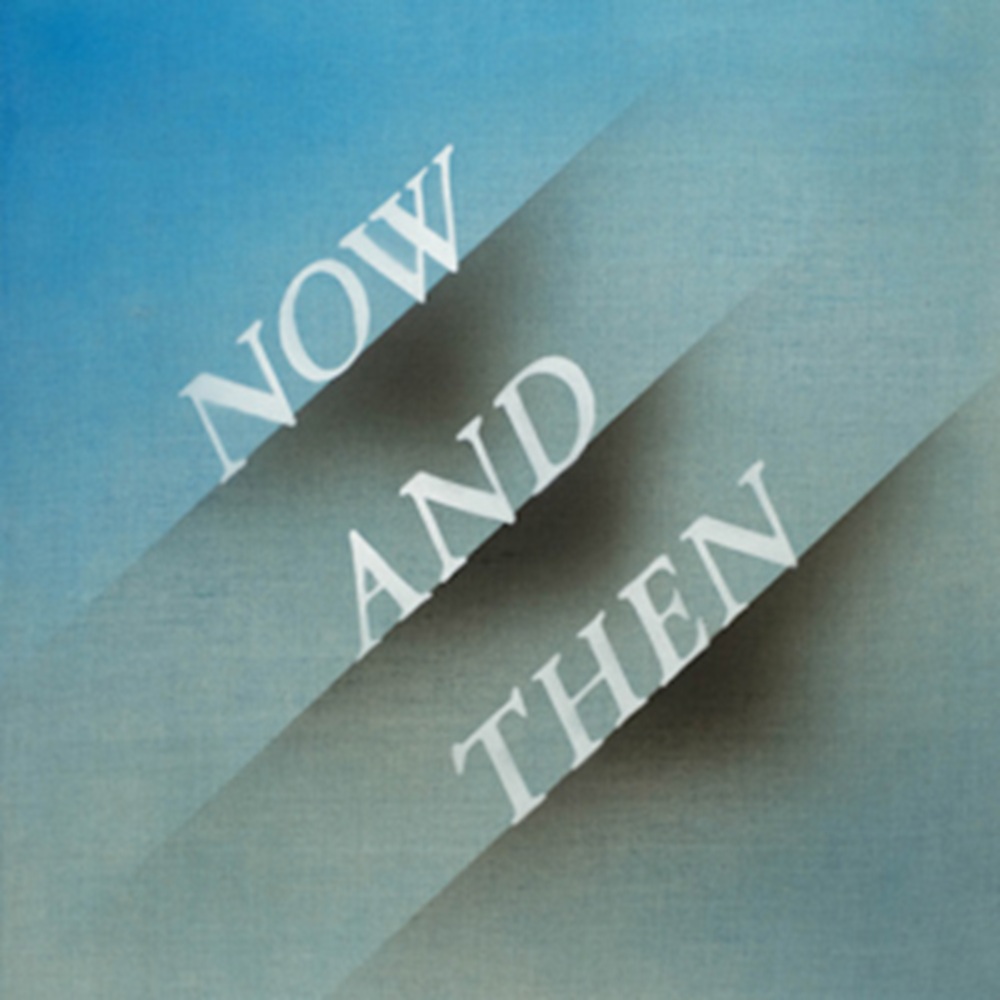
When Now and Then was released on November 2, 2023, it was the first new Beatles song to reach the public in twenty-seven years. It went to number one in the UK on November 10, the day of its physical single release. It was nominated for Record of the Year at the 67th Grammy Awards. It won Best Rock Performance at that same ceremony in February 2025, beating The Black Keys, Green Day, Idles, Pearl Jam, and St. Vincent. Sean Ono Lennon accepted the trophy on behalf of his father's group.
It was, in technical terms, a recording. Whether it was a Beatles recording is a question that depends on how the listener feels about the technology used to make it.
The 1977 demo
John Lennon recorded Now and Then at his apartment in the Dakota in New York, around 1977 or 1978. The original is a piano-and-vocal home demo, captured on a domestic cassette recorder. Lennon's voice and the piano are on the same track, which is the technical detail that would define the song's afterlife.
After Lennon's murder in December 1980, the demo sat in Yoko Ono's library. In 1994, she gave it to the surviving Beatles, along with the demos that became Free as a Bird and Real Love on the Anthology project. Of the three demos, Free as a Bird and Real Love were completed and released as new Beatles singles in 1995 and 1996. Now and Then was attempted, briefly, in March 1995, then shelved.
The reason was technical. In 1995, audio source separation, the ability to isolate one instrument or voice from a mixed recording, was not a viable technology. The Lennon demo had vocals and piano on the same cassette track, with a hum from a refrigerator or some similar appliance audible in the background. Producer Jeff Lynne, who oversaw Free as a Bird and Real Love, could not separate Lennon's vocal from the piano cleanly enough to build a Beatles arrangement around it. The other surviving members had reservations of their own. George Harrison, in particular, was reportedly unconvinced that the song was strong enough to justify the technical effort. Paul McCartney told Q magazine in 1997 that "George didn't like it. The Beatles being a democracy, we didn't do it."
The song was abandoned for nearly three decades.
Get Back, and the technology
The technology that made Now and Then possible came from an unexpected source: Peter Jackson's 2021 documentary series The Beatles: Get Back. Working with the original 1969 Let It Be sessions footage, Jackson's team developed a machine-learning audio separation tool that could isolate individual voices and instruments from mixed recordings. The technology was originally built to clean up dialogue from the Get Back footage.
Paul McCartney saw the potential immediately. In a June 2023 interview with BBC Radio 4's Today program, he disclosed that "the last Beatles record" had been completed using AI. The phrasing prompted alarm. Some listeners assumed AI had been used to synthesize Lennon's voice or generate new performance. McCartney clarified within days: "Nothing has been artificially or synthetically created. It's all real and we all play on it. We cleaned up some existing recordings, a process which has gone on for years."
The distinction matters. AI was used as a separation tool, not a generation tool. Lennon's actual 1977 vocal performance, captured on the original cassette, was extracted from the piano track and the room noise. Nothing was added that was not already on the tape. What McCartney and Ringo Starr then did was build a new Beatles arrangement around the cleaned vocal, including overdubs and a string arrangement co-arranged by McCartney, Giles Martin, and Ben Foster.
Crucially, the recording also contains George Harrison. During the 1995 sessions, before the project was abandoned, Harrison had recorded acoustic and electric guitar parts. These were preserved in the Anthology library and incorporated into the final 2023 mix. All four Beatles are on the track. It is the only Beatles recording to include all four members made after Lennon's death.
The release
The release rollout was unusually careful for a major-label single. A twelve-minute documentary directed by Oliver Murray was published on the Beatles' YouTube channel on November 1, 2023, the day before the song dropped. The film included session footage from both 1995 and the early 2020s, archival material, and interviews with McCartney, Starr, Sean Ono Lennon, and Peter Jackson.
The single itself appeared on streaming services on November 2 and as physical product the following day, paired with a new "true stereo" remix of the band's 1962 debut single Love Me Do. The two songs served as bookends to the band's recording history, the first single and the last, on a single double-A-side release. Vinyl pressings included white marble, light blue, clear, black 7-inch, red and black 12-inch editions, plus a cassette.
Ed Ruscha, the American artist who had designed the 2020 McCartney III cover, designed the Now and Then single sleeve. The back cover incorporated a photograph of a handmade folk-art clock that George Harrison had purchased in Providence, Rhode Island in 1997, with a Beatles photograph added to its face.
In the UK, the single went to number one on November 10, 2023, the same day as the release of the expanded 1967-1970 compilation that included it.
The reception
Critical response was largely positive but complicated. Variety's Jem Aswad gave the song a qualified endorsement: "Now and Then is not a lost Beatles classic. But to paraphrase McCartney's famous quote regarding criticism of The White Album, 'It's a bloody new Beatles song, shut up!'"
The more substantive criticism came from listeners who felt that the song's nature as a posthumous collaboration changed its status. Russell Root, writing in Salon, argued that Now and Then was "not a Beatles song, but rather a Beatles tribute song," and that the Anthology-era Free as a Bird and Real Love had stayed truer to both the original demos and the Beatles' sound. Mastering engineer Ian Shepherd noted that the stereo mix was heavily limited in dynamics, though the Dolby Atmos version did not suffer the same compression. Mastering engineer Miles Showell confirmed that the mix he received was indeed heavily compressed.
The AI question generated more debate than the music itself. Some commentators saw the song as a thoughtful and limited application of new technology. Others saw it as a precedent that opened the door to less careful uses of the same tools. The Grammy nomination, when it came in late 2024, intensified the debate. Was a song completed forty-five years after its composer's death, with the help of machine learning, eligible for an award meant to honor the year's best recordings?
The Recording Academy's answer was yes. Now and Then was nominated for Record of the Year, ultimately losing to Kendrick Lamar's Not Like Us, but won Best Rock Performance.
What it actually sounds like
For all the technological and ethical conversation around it, Now and Then is, at its core, a McCartney-shaped Lennon song. The melody is unmistakably Lennon, with the falling phrase structure and the deliberate rhyme schemes ("I know it's true / it's all because of you") that defined his late-period writing. The arrangement, with its strings, its tasteful acoustic guitars, and its carefully managed dynamics, is unmistakably McCartney.
The most affecting moment in the song is structural. The arrangement holds back during Lennon's verses, letting the cleaned vocal sit in the foreground with minimal accompaniment. When the strings enter, it feels both like a tribute to the orchestral arrangements George Martin built for Eleanor Rigby and A Day in the Life and like an admission that there are some things only McCartney would do to a Lennon vocal.
Ringo Starr's drums, recorded in the early 2020s, are the third Beatle voice on the song, distinctive for their characteristically loose feel. George Harrison's 1995 guitar parts thread through the second half. The result is, structurally, what it claims to be: all four Beatles, on a single recording, decades after such a thing should have been possible.
What comes next
In November 2025, the Now and Then mini-documentary was released as part of the song's two-year anniversary celebrations. Paul McCartney performed Now and Then live for the first time during his 2025 Got Back tour. The song's status, as something between a Beatles recording and a McCartney-produced tribute to the band's history, has settled into the catalog.
The technology that made it possible has, predictably, been applied elsewhere. Peter Jackson's separation tool has been used on additional Beatles library material. The Lennon estate has signaled that other unfinished demos may be candidates for similar treatment, though no further releases have been announced. The conversation about what AI assistance means in legacy artist contexts has, if anything, only intensified.
What Now and Then established, more clearly than the debate around it acknowledges, is that the question is no longer whether such recordings are possible. They are. The question is whether they should exist, what their relationship is to the original creative act, and how they should be received. Now and Then is the recording that forced those questions into the open. The answers are still being worked out.
For Maccafan readers specifically, the song also functioned as a quiet announcement that the Beatles library is still capable of surprises. The 1995 Harrison guitar parts, sitting in storage for nearly three decades, were not the last unreleased Beatles material in the vault. What else might emerge, on what timeline, with what technology, is no longer a hypothetical. It is a planning question.