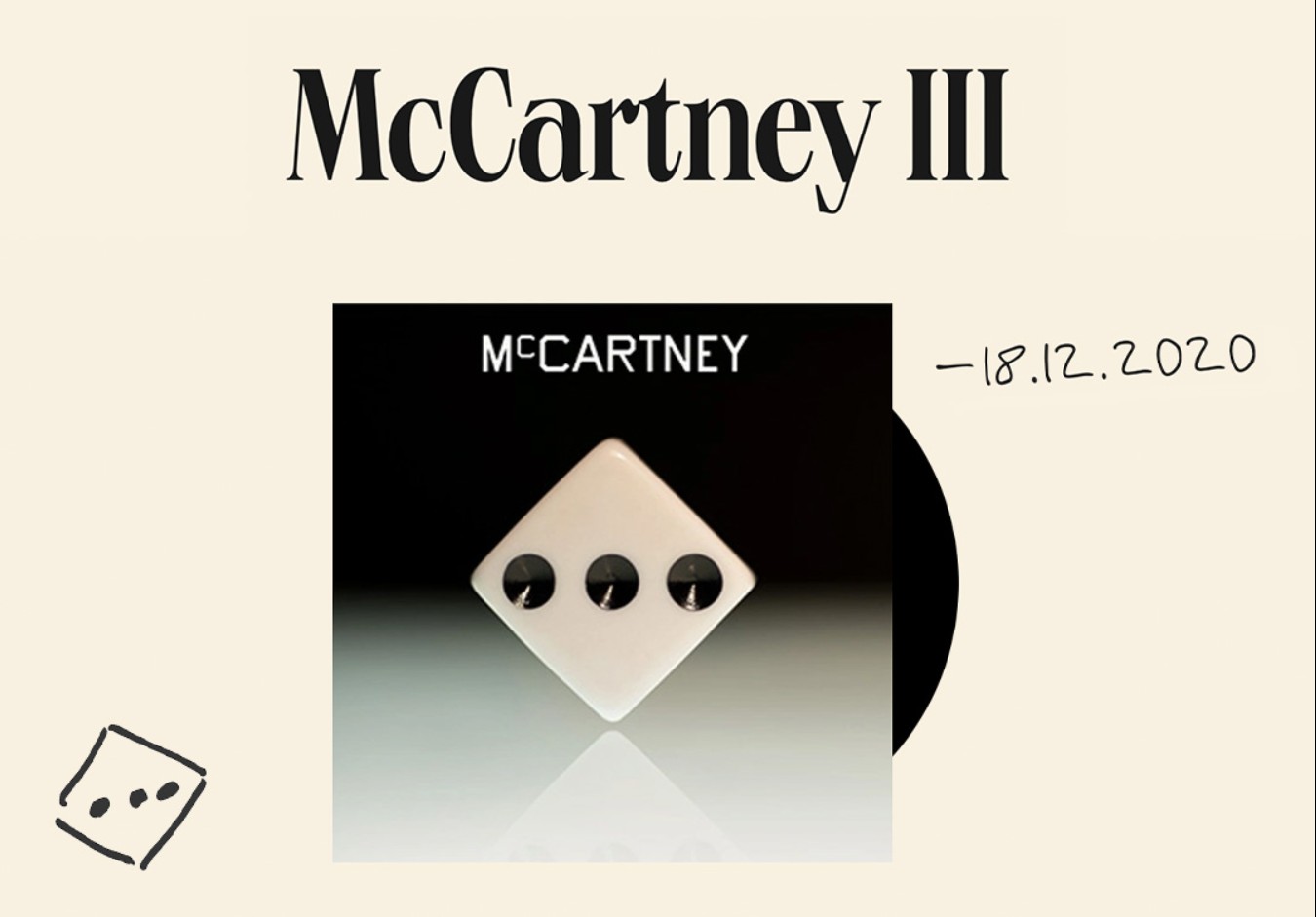
In December 2020, with the world locked down and concert halls shuttered, Paul McCartney quietly released his eighteenth solo studio album. McCartney III arrived without the year-long marketing campaign typical of major artist releases. There was no tour, no late-night television appearance, no Glastonbury headline slot. There was just a record, recorded almost entirely alone in Sussex during the early months of the pandemic, and a generation of fans suddenly thrown into the strange position of receiving brand-new music from a Beatle in real time.
Five years on, McCartney III has settled into the catalog. It's worth asking how it sits there.
The trilogy, completed
Paul has made three solo albums titled simply for himself: McCartney in 1970, McCartney II in 1980, and McCartney III in 2020. Each was made largely alone, each appeared during a moment of creative or personal transition, and each was treated, on release, as something of a curiosity rather than a major statement.
McCartney (1970) was famously the album that broke the Beatles, recorded in his home studio in the months following Linda's first pregnancy and the band's collapse. McCartney II (1980), made in the wake of the Wings tour cancellation and Paul's brief Japanese imprisonment, leaned heavily into early-eighties synth experimentation in a way that puzzled critics at the time but has since been reassessed as quietly prescient.
McCartney III completes the loop, fifty years on from the first. The pattern is the same: a Beatle alone with his instruments, working without committee. The result, this time, is more reflective than experimental.
Recording history
By Paul's own account in the album's accompanying interviews, McCartney III began without an album in mind. He had been working on a film score that fell through when production halted in March 2020. Rather than abandon the recordings, he kept going. Songs accumulated. Eventually he had a record.
The album was tracked at Hog Hill Mill, his Sussex studio. With the exception of brass on one track and some additional vocals, Paul played every instrument himself.
What the album sounds like
McCartney III is, by Paul's standards, a quiet record. There are flashes of his familiar pop instincts (Find My Way opens the album with a propulsive guitar line that wouldn't sound out of place on Flaming Pie), but the dominant mode is reflective. Pretty Boys, Women and Wives, and Deep Deep Feeling are all built around vocal performances that lean into Paul's age rather than away from it.
The most striking track, Long Tailed Winter Bird, opens the album with seven minutes of acoustic guitar and percussive vocalization, instrumental except for some wordless vocal tracking late in the song. It's the kind of opening that announces a record is going to take its time.
Critical reception
The album was generally well-received on release, with critics noting its intimacy and Paul's evident comfort with solo recording. Rolling Stone gave it a four-star review. MOJO placed it in its top albums of 2020. Pitchfork gave it a 7.1, which for Paul represents a very respectable score from a publication that has historically been cool to Beatles solo work.
Five years on, the consensus seems to be that McCartney III is the best of the three trilogy entries. It lacks the historical weight of the 1970 album (which arrived with the Beatles' breakup as its subtext) and the bracing weirdness of the 1980 record, but it has something the other two don't: an artist comfortable in his own skin, making music for its own sake.
Place in the catalog
Where does McCartney III sit in the broader McCartney solo discography? It's not at the top: Band on the Run, Ram, Tug of War, and Flaming Pie still occupy that ground. But it's better than its quiet release would suggest, and it's holding up as well as any record Paul has made since Chaos and Creation in the Backyard (2005).
For an artist who has been releasing music continuously for sixty-three years, the achievement of McCartney III is not that it's a comeback (Paul never went anywhere) or a reinvention (he doesn't reinvent). The achievement is that, at seventy-eight, alone in a studio, with no commercial expectation hanging over the project, he made a record that is recognizably and unmistakably his own.
That's harder than it sounds.